When the rainy season falls in Los Angeles, in the normals
February is the wettest month on average at 3.64 inches, followed by January at 3.29 and December at 2.48,1 in the NOAA 1991 to 2020 normals from Downtown Los Angeles. Those three months carry 9.41 of the yearly 14.25 inches. The year averages about 21 days with a tenth of an inch of rain or more.1
Summer is close to rainless. June, July and August together average 0.11 inch, and August averages none.1 A weekend afternoon pulled from the dry stretch is a weekend afternoon with the garage door open and the driveway clear for sorting.
Why a garage cleanout before the rainy season fits those dry months
A cleanout runs through boxes that come off the shelves to the driveway and back, loaded piles that wait by the door for a City pickup day, and bagged yard trimmings that sit by the driveway before they ride out. All of that is work for a dry afternoon with the door open and the air moving.
A garage cleanout covers the pickup side of the work: the shelves, the boxes, the old furniture, the bikes, the workbench and the attic above when it is part of the cleanout.
Clear the floor and the garage door edge first
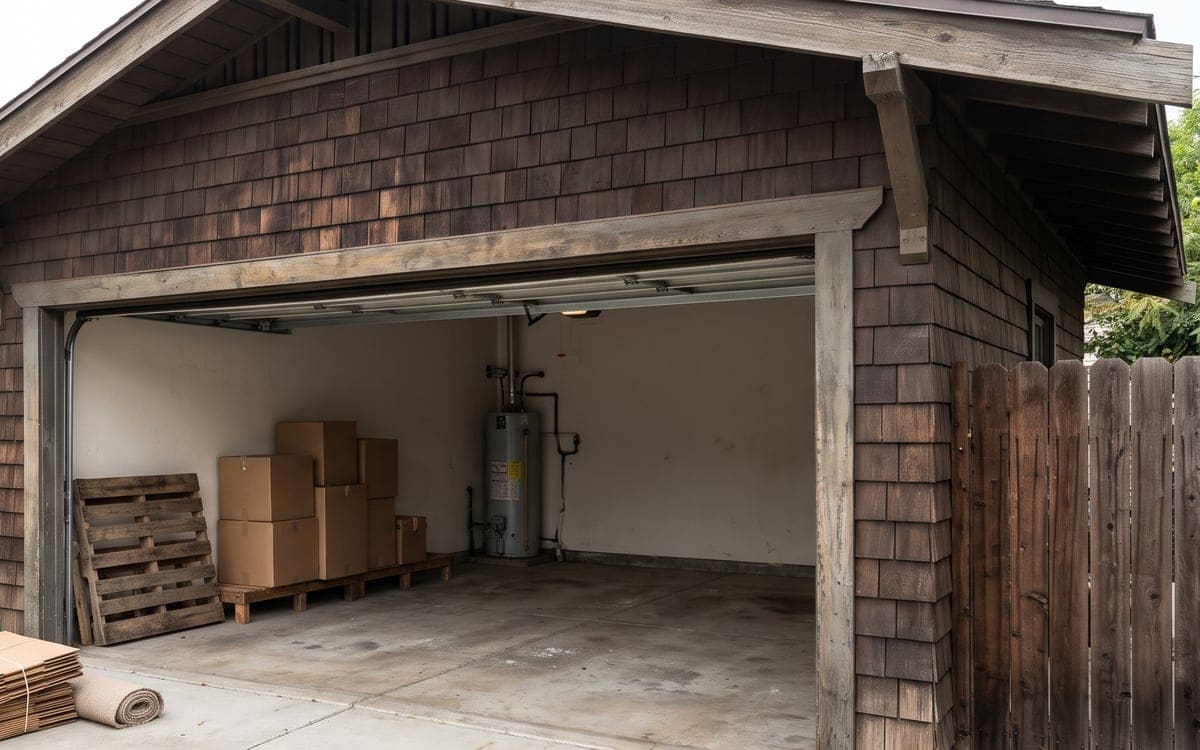
The two spots that matter most in a dry-window cleanout are the floor between the back wall and the roll-up door, and the edge where the door sits down on the concrete. A floor crossed by stacks and bins slows the whole job, and a door blocked by a bin at its base will not sit down on the concrete at the end of the day.
Walk the garage with a wide push broom first. Pull the pile at the door back by a foot or two so the roll-up seats on its concrete again. Walk the floor from the back wall to the door, naming every piece out loud as it goes by: a box of winter blankets, a plastic bin of holiday lights, two folding chairs, an old lamp, a dead printer. Items without a destination go into the sort pile; items the household is keeping ride up onto the shelves or back along the wall.
A workbench and a pegboard full of tools are each a yes-or-no decision for the household. Shelves stay or come down in sections.
Boxes up off the floor, heavy items out of the garage
A few plain moves cut most of the pile. The boxes that stay in the garage go up off the floor and onto wire shelving or a wooden pallet along the wall. The pieces that no longer belong in the garage, a dead washer that moved out of the laundry room summers ago or a replaced water heater, come out to the driveway as part of the pickup, and the dust and grime at the base of each shelf gets a sweep.
Opening every box is not required. A labeled bin that has not been touched in years is a decision a household already knows the answer to. A single pass by the pile with a marker puts a decision on each box.
An old appliance or a piece of furniture is heavy. The weight is the same whether a dolly, a strap, a second person or a pickup day moves the piece. A household moving pieces to the driveway stays well inside what is comfortable for every person on the job.
A dead refrigerator or window air conditioner in the garage goes on appliance removal as its own job. Bagged yard trimmings go on the yard waste page.
What to sort for the City, for a donation, or for a hauler
Once the sort pile is on the driveway, three piles come out of it: the City pile, the donation pile and the hauler pile.
For the City pile, LA Sanitation will gladly take furniture (couches, tables, chairs), mattresses and box springs, toilets and sinks, carpet rolled and tied, large wood pieces or doors, and electronic waste.2 An old garage couch, a rolled rug and a folded card table all fit. The bulky item pickup guide is on the request step.
For the donation pile, furniture donation is on the asking step: phone the center and ask about the piece. The call is the center's; the household names the piece and the center answers.
For the hauler pile, a phone call carries the pieces: the number of pieces, the room each sits in now (the garage, mostly), and the way out from the garage door to the driveway. A household already standing in the garage can see each piece and name it in a sentence or two. The services page collects the household jobs on one list.
Paint, solvents, batteries, fluorescent lights and the other household hazardous items that live in a garage are a resident's own errand. How to dispose of large items runs the routes by category.