Start the checklist with what the family wants to keep
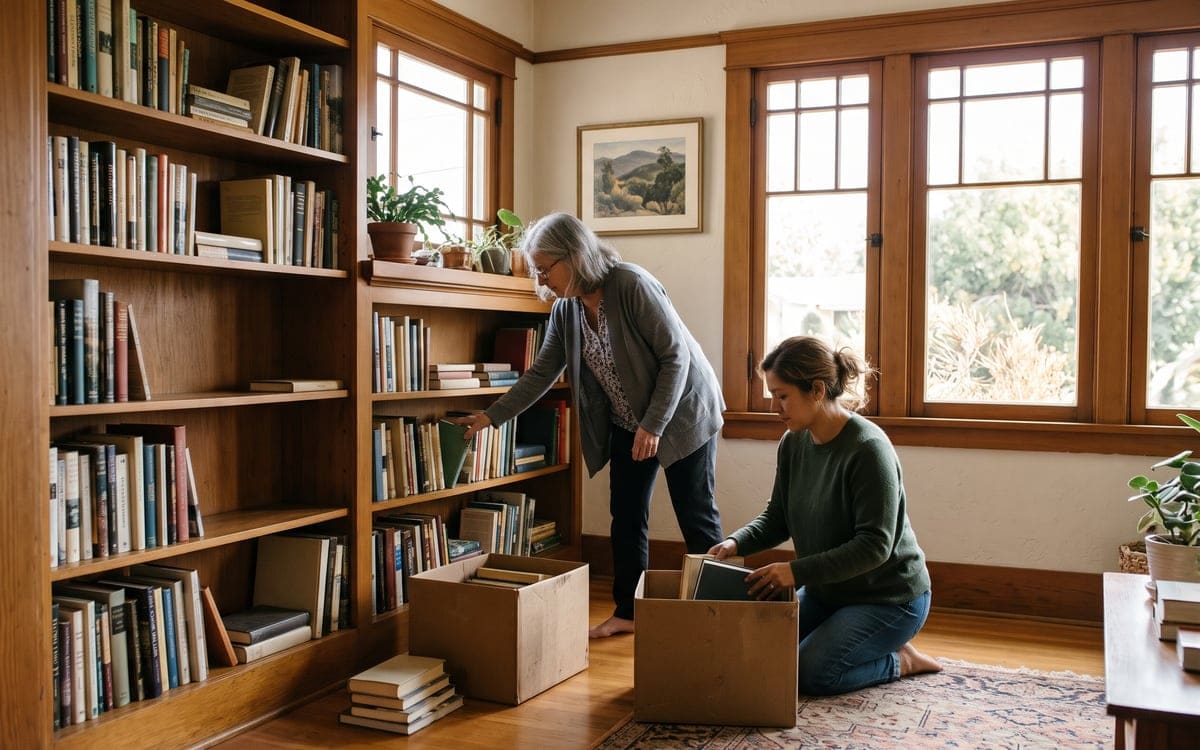
Before anything leaves a room, the family walks the house and marks a spot for the keeps. A labeled corner of a bedroom, a sticker on each piece, or a piece of painter's tape on the frame carries the point. A spare bedroom, a dining room with the door closed, or a locked closet works for the smaller items the family wants to come back to.
The first question is personal. Photographs and letters sit outside the sort for the house, along with the small things the family wants to come back to. Once the keeps are gathered, the rest of the house becomes work for the three piles.
About 18 percent of the city's owner households moved into their home in 1989 or earlier, and about 34 percent moved in before 2000.1 The Census figures stand on their own.
Work the house room by room, one pile at a time
Pick a room and finish it before the next one starts. The family sets the order.
Inside a room, three piles come out of each closet, each drawer and each surface. One pile is the keeps for the family. One pile is the pieces still in good shape, bound for a donation center. One pile is what leaves the house on the City's pickup or a hauler's call. A fourth smaller pile, when it comes up, holds the household hazardous items that go on a separate trip.
When the sort reaches the garage, the three piles become three physical zones on the concrete floor, with an index card on each one. The keeps the family has not already moved sit together as the fourth group along the wall.
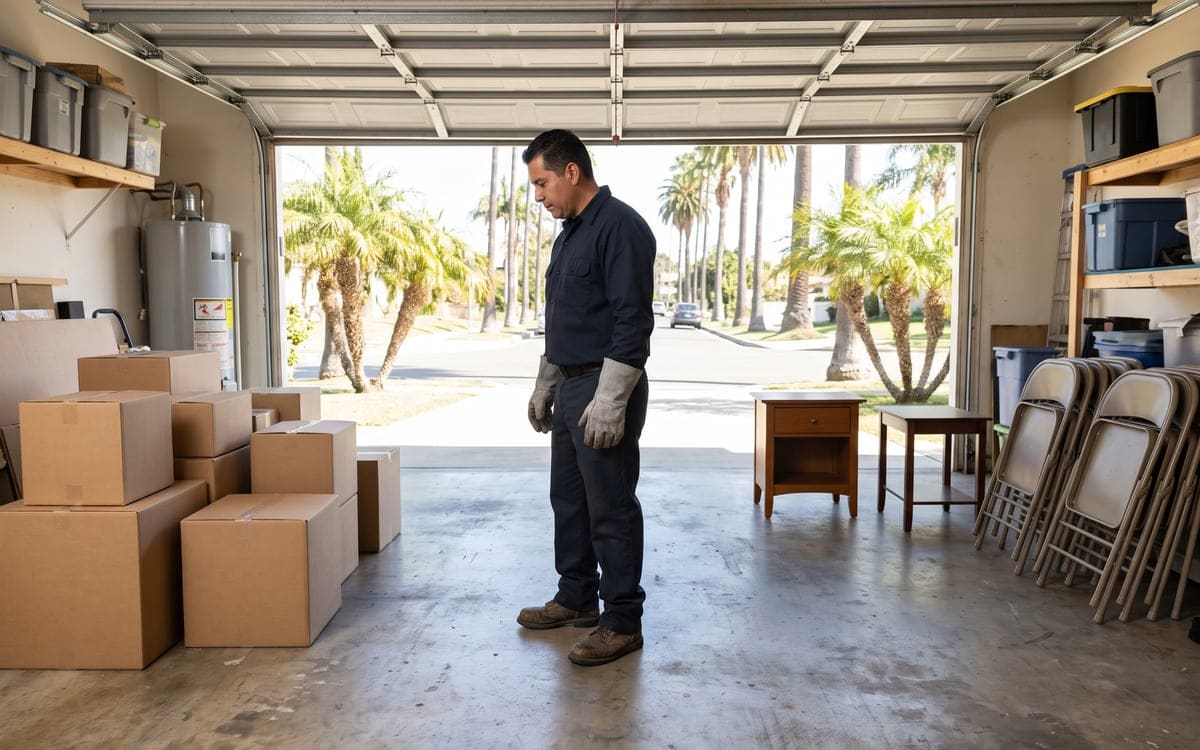
The sort does not require opening every box. A labeled bin that has not been touched in years is a decision the family can place with a single pen stroke on the lid.
| Room or area | What to sort | Where the rest can go |
|---|---|---|
| Living and dining rooms | Couches, chairs, side tables, lamps, framed art, china | Donation pile or City pickup for the furniture |
| Bedrooms and closets | Dressers, bed frames, mattresses, clothes, linens | Mattresses to the City or a hauler, clothes to donation |
| Kitchen and pantry | Pots, pans, small appliances, dishes, canned staples | Donation if usable; the rest to a hauler |
| Garage | Shelves, boxes, old furniture, bikes, workbench | Three zones on the floor, keeps and donation apart |
| Yard | Folding chairs, bagged trimmings, planters | Bagged trimmings to the yard waste page, usable chairs to donation |
| Hallways and stairs | Rugs, side tables, hall closets, framed photos | Keeps up front, the rest on the floor plan for pickup |
Old medicine from a bathroom cabinet is not on the City's bulky item pickup list,2 so a resident sorts that out on its own trip.
The garage and the yard are separate parts of the cleanout
A house with a detached garage runs as two cleanouts that meet at the driveway. The inside work from the rooms, the garage with its shelves and bikes and the yard with its folding chairs and bagged trimmings each come to the driveway in their own order. About 78 percent of the city's owner households live in detached houses,3 so a detached-house layout is the usual one for a Los Angeles cleanout.
The garage holds pieces a family may not have touched for a while: a dead water heater that was swapped out, a chest freezer whose motor failed, holiday decorations, exercise equipment, bikes and bike parts. A garage cleanout covers the pickup side of that work.
The yard pile is usually smaller. Folding chairs, a plastic planter, bags of grass clippings and brush, maybe an old barbecue. Yard waste removal carries bagged yard trimmings off the driveway as a separate call. Appliances in a garage, a kitchen that is being emptied, or a laundry room that stays with the house are a mix for appliance removal along with furniture removal and mattress pickup depending on the pieces.
Items the City picks up at the curb, and items it refuses
LA Sanitation's bulky item pickup covers much of what a cleanout turns up. LA Sanitation says it will gladly take furniture (couches, tables, chairs), mattresses and box springs, toilets and sinks, carpet rolled and tied, large wood pieces or doors, and electronic waste2 at the curb. The bulky item pickup guide is on the request step.
On the same page, for safety and environmental reasons,2 LA Sanitation cannot pick up at the curb automotive parts or used oil, construction materials (concrete, bricks, dirt), and commercial appliances. The same page says it also cannot pick up paints, solvents or chemicals, medicines or needles, fluorescent lights, or cardboard (unless the household has a scheduled Move In/Move Out service). Those lines match the shape of what a cleanout turns up: a cabinet of paint cans in the garage, fluorescent lights above a workbench, a leftover bag of concrete under it.
A hauler covers the furniture, mattresses and other household pieces inside the City's accepted list on a hauling call. What moves the price is on its own page.
Donating what is still in good shape, by asking the center first
LA Sanitation encourages residents to think about donating before scheduling a pickup,2 with furniture or appliances still in good shape going to a local thrift store, a charity, or a community exchange app. The City names none of them.
A phone call to the center is the step before anything leaves the house. Describe the piece in plain words, give its measurements, ask whether the center picks up or whether the piece has to arrive at a drop-off, and ask the hours. Furniture donation walks through the question step for a chair or a dining set, and the same questions carry a kitchen table, a desk, a bookshelf or a dresser.
A piece a center turns away still has a route for items on the City's accepted list: the bulky item pickup, for the households LA Sanitation serves. A hauler covers pieces in a mixed cleanout.
Household hazardous waste goes to a S.A.F.E. Center
The paint cans in the garage, the pool chemicals under the sink, the fluorescent tubes above the workbench: none of those go on a bulky pickup. LA Sanitation says accepted household hazardous waste may include aerosol cans, automotive fluids and products (including petroleum-based fuels), household cleaners and chemicals, fluorescent bulbs and mercury-containing items, paints, stains and solvents, pesticides and herbicides, pool chemicals and propane cylinders, and that S.A.F.E. Centers do not accept explosives, radioactive materials or medical waste.4
A S.A.F.E. drop is a resident's own errand to the City's linked S.A.F.E. page.4
What to tell a hauler about a Los Angeles house
The call runs through the rooms going out, the floors they are on, and which of them is already sorted. Walk the garage before the call and have a plain picture of how full it is and whether the roll-up door opens cleanly, and do the same for the yard with its bagged and loose pieces.
The way out of the house matters as much as what is inside: the front door, the back door through the kitchen, the garage side door onto the driveway, or the garage roll-up itself, with any stairs, landings, railings and a gate between the backyard and the driveway. Mention the family's keeps too, with the room they are gathered in.
The estate cleanout page covers the service side, the services page is the index of household jobs, and how to dispose of large items carries the by-category view of where each item goes.